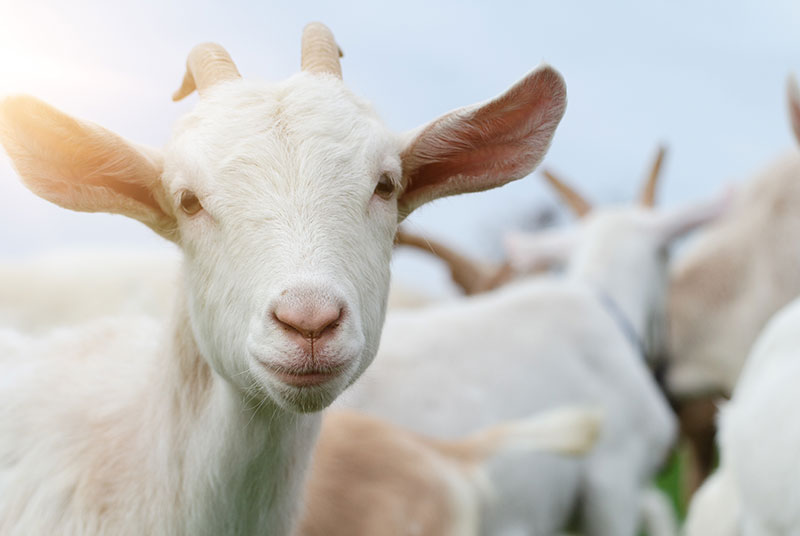
Trafalgar, in West Gippsland is well known for its rich farmland, high rainfall and kind climate. In 2010 we will farm 5000 dairy goats using the feed we grow on farm, local employees for milking and farm work and enjoy the farm we are lucky to have. At this time we farm half the total milking goats in Australia and are growing at a rapid pace to stay Australia’s leading goat milk supplier
Milking is twice a day. A team of 5 people arrive every morning at 5am to begin milking. It takes 3 people 4 hours to milk the goats, the other 2 are working outside bringing goats to the dairy parlour and making sure that all the animals have feed to eat and are healthy. Mornings are very busy times of the day for us making sure that everything is to milked and fed in time for the milk tanker which arrives to take the milk fresh to the factory.
In the spring when the kids are being born more people will start early to feed the kids their milk, feed the hay and do the many jobs that are needed for kid rearing. One of the interesting things about goats is that they like to kid at the same time. This means that it is normal for the farm to have 200 new baby kids born each day for a busy week. At these times we may have 4 people each day feeding and looking after new born babies. The new born kids stay with their mothers for the first day to make sure they get the colostrum they need for a healthy start to life.
Afternoon milking starts again at 3pm with all the staff on their home by 7pm. By this time the goats will have been checked again and made sure that everything is right for the night.
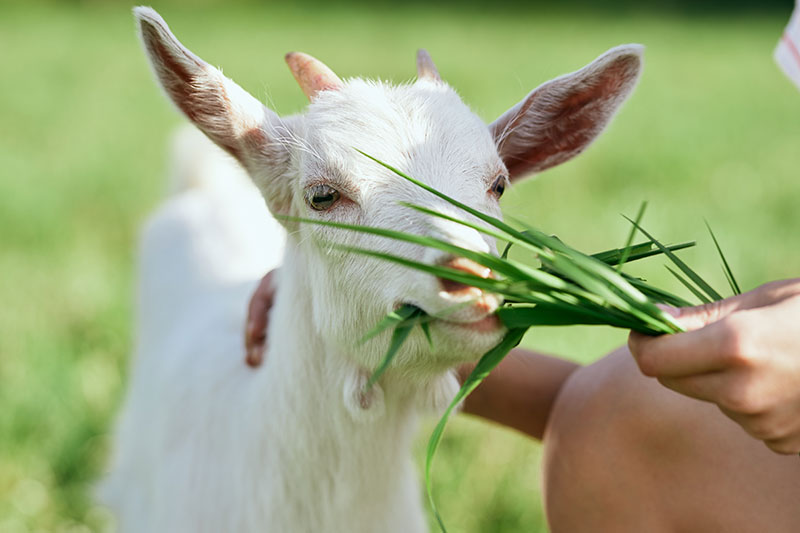
We feed our goats a mixture of food, most of which is grown on the farm. Home grown pasture, silage and hay form the majority of the goat’s diet. In addition they get a concentrate ration along with some minerals and vitamins to make sure they stay healthy. We do not use feed modifiers or antibiotics in our feeds and all our foods are GMO free.
Our goats are kept on sawdust in large open air barns with lots of room to move around. Our goats are kept dry, clean and well fed and in a well ventilated environment. By keeping the goats in this way we keep the goats free of internal parasites ( which means we don’t have to drench them with anthelmintics), they stay warm and dry which keeps them healthy, and they stay free from the foxes which can be a problem with new born kids. Goats are a social and friendly animal that like living in a familiar environment. We farm like this to ensure a well balanced diet, freedom from disease and for good quality milk. As part of our farming and business policy we offer customers the opportunity to visit the farm, simply contact us at info@caprilac.com
A: Mainly they are Saanen, which is large white goat. We also have Alpines which are black and some Toggenburgs which are brown.
Q: How often are they milked? A: Twice a day; 5am in the morning and 3pm in the afternoon.
Q: How much milk do they give? A: We average 2.7 litres per goat per day for 300 days lactation.
Q: Do they have individual names? A: Not each goat, can you think of 5000 names? But a fair number of goats have a nickname given by the farm staff, you would be surprised how many of the goats are individually known, they are such characters.
Q: How long do goats live? A: As an average they milk 5 years, but we have some goats that are much older.
Q: What are those little things hanging down from under their necks? A: They are called wattles or toggles. I don’t know what they are for either. Some goats have them, some have 2, some have 1.
Q: How often do they have kids? A: Once a year, on average they will have 2.4 kids. We have kids from June until December.
Q: How many bucks do you have? A: With our 5000 milking goats our Saanen Bucks are never short of company. Typically one buck for 50 Does.
Q: What is the gestation period? A: 5 months.
Q: Are the sick goats treated with antibiotics? A: Yes, we do treat our sick goats with antibiotics when ill. If the sick goat is in milk we discard the milk for double the length of time required by law.
Q: Do you use growth hormones? A: NO.
Q: Do you sell your milk at the farm for home use? A: No. We only sell pasteurised milk through the Caprilac brand.